
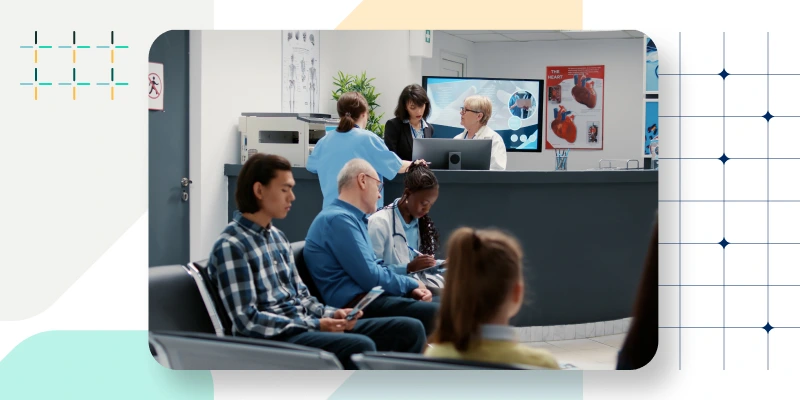
Healthcare is changing fast. Patients expect safer care, regulators expect accountability, and leadership expects performance that can stand up to scrutiny. At the same time, hospitals and clinics are dealing with staffing gaps, complex systems, and growing documentation demands. In this environment, small issues can quietly turn into major problems if they are not managed early.
That is why risk and quality management have become a central priority for healthcare organizations. It brings together patient safety, operational discipline, and continuous improvement into one practical approach. When done well, it supports better outcomes, smoother workflows, and stronger trust across the organization.
At a glance, risk and quality management connect three important goals: protecting patients, meeting safety and compliance requirements, and improving how care is delivered every day. It gives leaders and frontline teams a way to see clearly, act early, and improve consistently rather than reacting when things already feel out of control.
Core Concepts of Risk and Quality Management
To understand the full picture, it helps to look at the two sides separately.
Risk management focuses on:
- Identifying potential threats
- Assessing their impact and likelihood
- Reducing risks that can harm patients, staff, or the organization
These threats may involve clinical errors, workflow breakdowns, legal exposure, cybersecurity issues, or operational failures. The aim here is to spot danger early and reduce its impact before it spreads.
What’s more, a key part of this work is clinical risk assessment. Teams review incidents, near misses, audits, and operational patterns to understand where harm might occur. Instead of guessing, they use structured methods to evaluate risk and prioritize action.
Healthcare quality management, on the other hand, concentrates on improving:
- Care delivery
- Reliability
- Performance
It uses standards, reviews, and feedback to strengthen how care services are provided. Quality teams look at outcomes, documentation, response times, and adherence to policies. Meanwhile, they rely on quality metrics to measure progress and identify gaps.
In a nutshell, risk and quality management create a practical system that supports learning, accountability, and better decisions across the healthcare organization.
Key Risks in Healthcare
Healthcare organizations face several sorts of risks. Each one affects performance in different ways.
Clinical Risks
For instance, clinical risks are the most visible. These risks include:
- Medication errors
- Patient Falls
- Infections
- Delayed diagnoses
- Communication breakdowns.
Without reliable incident reporting systems and follow-up, these issues repeat themselves instead of turning into lessons.
Operational and Financial Risks
On the other hand, operational and financial risks affect staffing, billing, documentation, and resource use. Missing records, inefficient workflows, or poor coordination can lead to higher costs and lower performance. Strong hospital quality assurance programs help detect these gaps before they damage outcomes or revenue.
Technology Risks
Technology risks grow quickly. Cybersecurity threats, data breaches, and system outages place patient data and operations at risk. Risk management teams must now consider digital safety alongside clinical safety.
Regulatory Risks
Regulatory risks, if neglected, affect every healthcare organization. Standards for privacy, patient safety, and reporting are strict. Weak regulatory compliance healthcare programs can lead to fines, reputational harm, and operational disruption. That is why consistent documentation and audit readiness matter so much.
Each of these risks connects back to daily operations, staff behavior, and leadership visibility. If any of the risks go overlooked, it’ll affect the bottom line of the healthcare organization.
Strategies for Effective Healthcare Management
Risk and quality programs do not happen by accident. They grow from structure, culture, and smart use of tools. Therefore, stringent risk and quality management methodologies must be embedded within the healthcare premises to avoid future casualties.
Key Management Practices
#1. One important step you need to note here is regular risk assessments. Leaders and teams should review processes, incident trends, and compliance gaps. This will keep risk monitoring active instead of reactive.
#2. Staff training also plays a major role. When people understand reporting procedures and quality expectations, participation increases. Transparent reporting supports learning rather than blame.
#3. Clear communication helps teams stay in the know. When staff see how their reports and audits lead to real improvement, engagement improves naturally.
#4. Technology also supports consistency. Integrated systems connect reporting, audits, reviews, and follow-ups. This creates a smoother workflow for quality and risk leaders.
#5. Leadership involvement is also critical. It ties everything together. When leaders support safety programs and improvement goals, risk and quality become part of everyday culture rather than special, one time projects.
Technology’s Role in Risk and Quality
Modern healthcare generates large amounts of data. Without a proper structure, this data stays scattered across spreadsheets, emails, and disconnected systems. That makes learning slow and stressful.
Unified Clinical Intelligence platforms now bring incident tracking, audits, performance improvements, and analytics into one environment. They support real-time event tracking, structured documentation, and faster routing of reports.
With the help of these tools, teams can monitor trends, respond sooner, and reduce manual effort. As a result, performance monitoring becomes part of routine operations rather than something done only before surveys.
In addition, technology supports hospital audit readiness. Documentation stays organized, actions are traceable, and leaders have visibility into compliance status throughout the year.
For community and rural hospitals especially, streamlined platforms reduce administrative burden while strengthening oversight and governance.
PristaCorp’s ActionCue CI is designed with this reality in mind. It connects risk monitoring, audits, and quality workflows into one clinical intelligence environment that supports both frontline teams and leadership.
Learn more about: What Is Clinical Intelligence and Why It Matters in Healthcare Today.
Benefits and Best Practices
Strong risk and quality management delivers clear organizational value.
First, it improves patient safety. Early detection and consistent reporting reduce harm and support better outcomes.
Second, it protects reputation. Reliable incident reporting systems and quality programs demonstrate accountability to regulators, partners, and the public.
Third, it reduces costs. Fewer adverse events, smoother workflows, and better documentation prevent rework and inefficiency.
Fourth, it improves staff confidence. Clear processes and useful feedback help teams feel supported rather than overwhelmed.
Some useful practices include:
- Prioritize high-impact risks using clinical risk assessment results.
- Use data from incident tracking and audits to guide decisions.
- Align quality metrics with operational and safety goals.
- Maintain continuous risk monitoring instead of periodic reviews.
- Support leadership oversight through strong healthcare governance frameworks.
- When these habits become routine, quality improvement feels natural rather than forced.
Healthcare Governance and Accountability
Risk and quality management also supports leadership and boards. Through strong healthcare governance, organizations connect frontline activity with strategic oversight.
Leaders rely on dashboards, reports, and audits to understand where systems perform well and where attention is needed. A high-level view helps decision-making, as transparent data supports accountability and planning.
Furthermore, governance improves when leaders see performance monitoring and compliance as continuous processes instead of seasonal events. With reliable information, decisions become clearer and more confident.
Bringing It All Together
Healthcare organizations operate under constant pressure to deliver safe, compliant, and high-quality care. Risk and quality management brings structure to that challenge. It supports patient safety, regulatory readiness, and operational efficiency at the same time.
With strong hospital risk management, healthcare quality management, and connected systems for reporting and monitoring, organizations stay prepared than surprised. Use the insights shared here to refine your healthcare practices, strengthen compliance, and drive meaningful improvement across your organization.
For healthcare teams seeking a reliable way to strengthen risk and quality management, Prista provides a purpose-built tool that supports safer, smarter, and more efficient operations.
Prista Can Help You with Risk and Quality Management
Here is how:
At Prista Corporation, we believe technology should support people, not slow them down. Our clinical intelligence platform, ActionCue CI, helps organizations manage risk and quality with clarity and confidence.
ActionCue CI helps your team with (including but not limited to):
- Incident reporting systems
- Structured event tracking
- Performance monitoring
- Audit workflows
All those, in one unified platform.
Moreover, ActionCue CI increases hospital quality assurance, supports regulatory compliance healthcare, and improves visibility for leaders through real-time insights. While connecting data with action, this clinical intelligence tool helps teams improve safety, documentation, and governance without adding unnecessary administrative work.
If your organization is ready to improve risk and quality management, Prista Corp is here to support you. Schedule a demo!